
Client Background
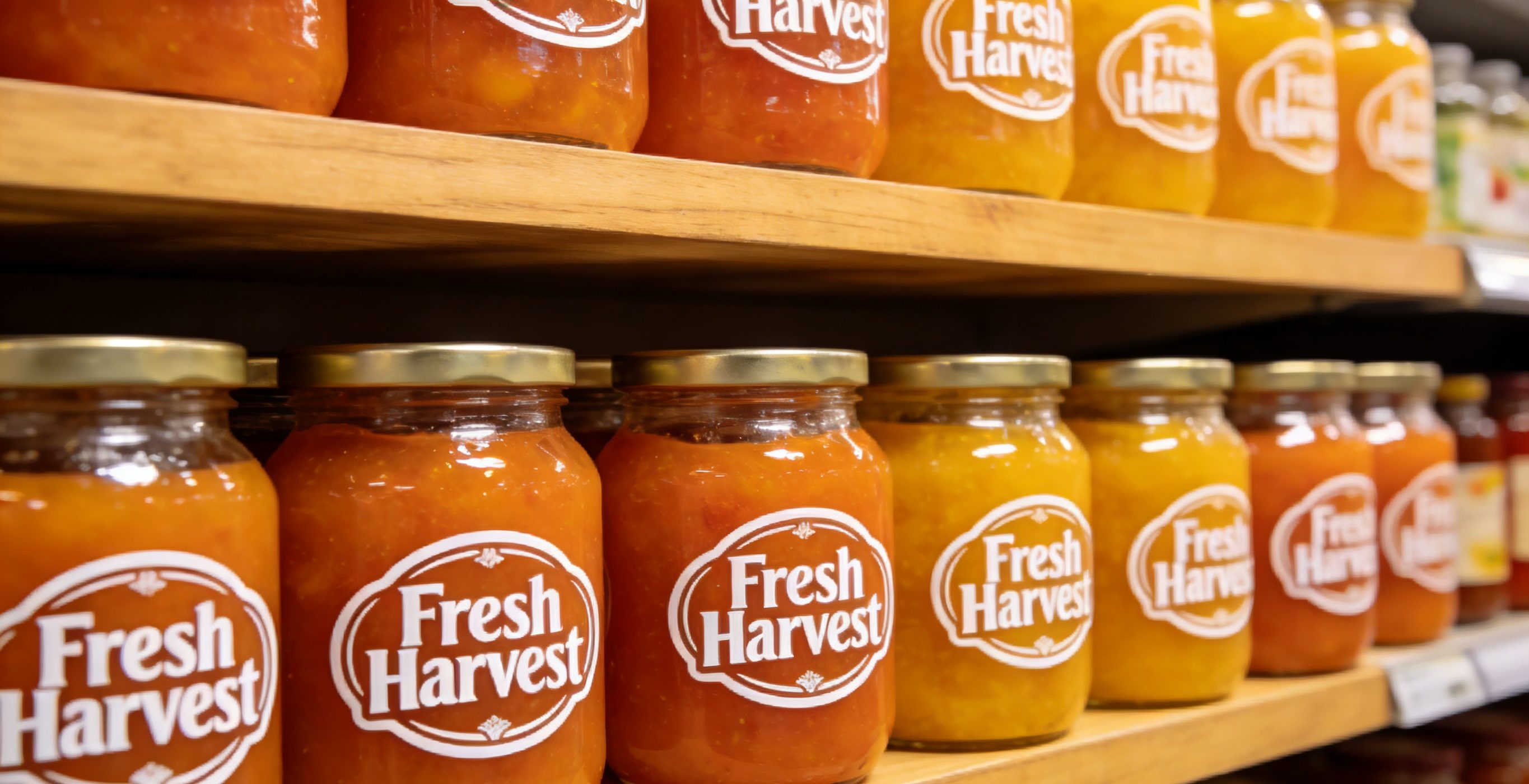
Our client is a leading food brand specializing in premium preserved fruits, jams, and sauces, catering to European and North American retail markets. Their products are primarily sold in supermarkets and specialty food stores, where consumers frequently reuse glass jars for home storage—making logo durability and dishwasher compatibility critical to brand visibility and customer experience.
Core Pain Point
The client faced persistent issues with their original glass jar logo printing:
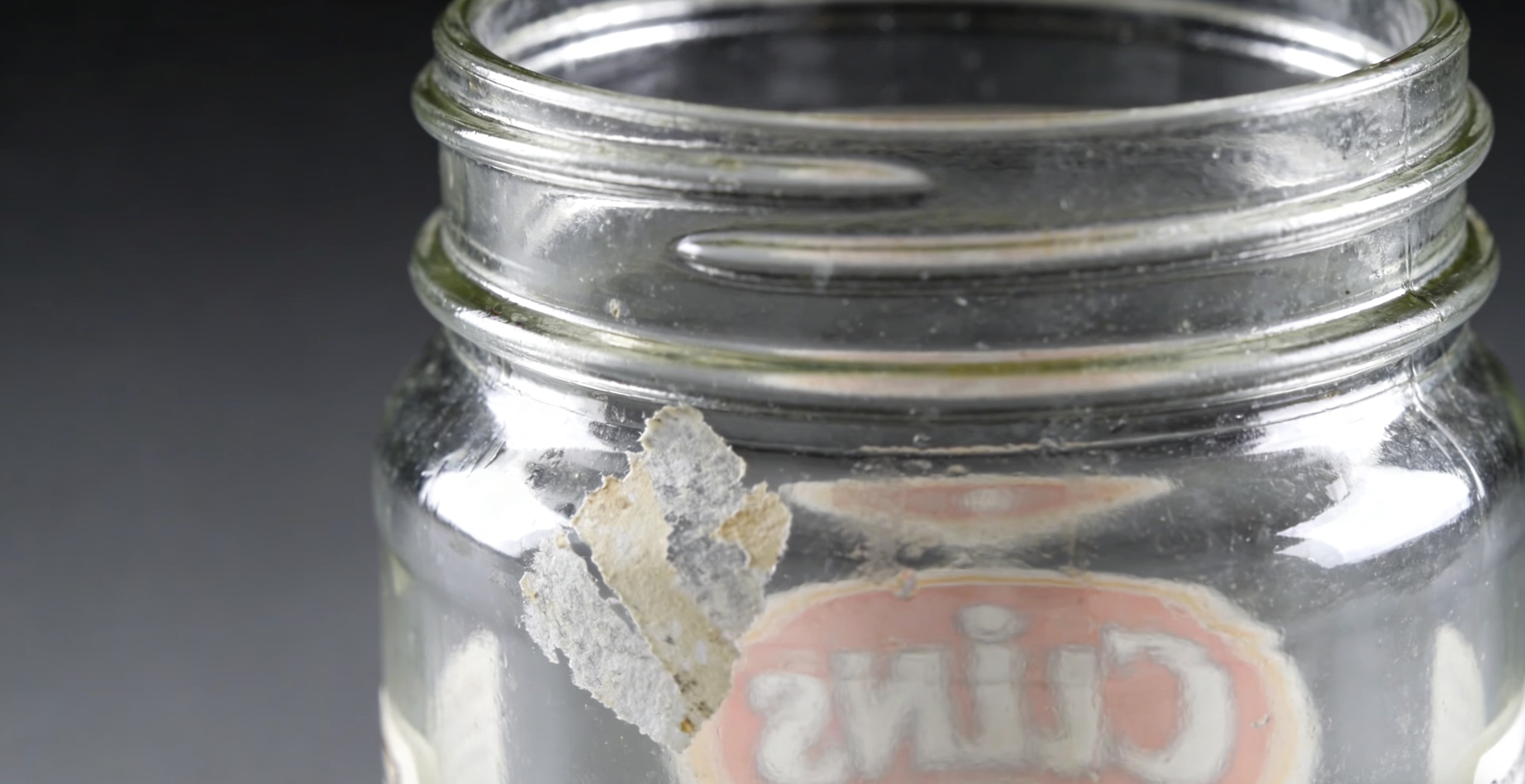
1. Logo Peeling & Fading: The initial adhesive stickers and low-temperature screen printing logos would peel off after just 2–3 dishwasher cycles, or fade and blur when exposed to oil, vinegar, and other acidic food residues.
2. Brand Visibility Loss: Peeled logos made it impossible for consumers to identify the brand during secondary use, weakening brand recall and reducing the word-of-mouth marketing effect of reusable jars.
3. High Replacement Costs: Frequent customer complaints about logo peeling forced the client to replace damaged packaging, adding an extra $12,000 in annual costs for after-sales support.
Our Custom Solution
To address the client’s needs for durable, dishwasher-safe logo printing, our technical team recommended a high-temperature screen printing and ceramic decal (decal firing) dual solution, tailored to their product characteristics:
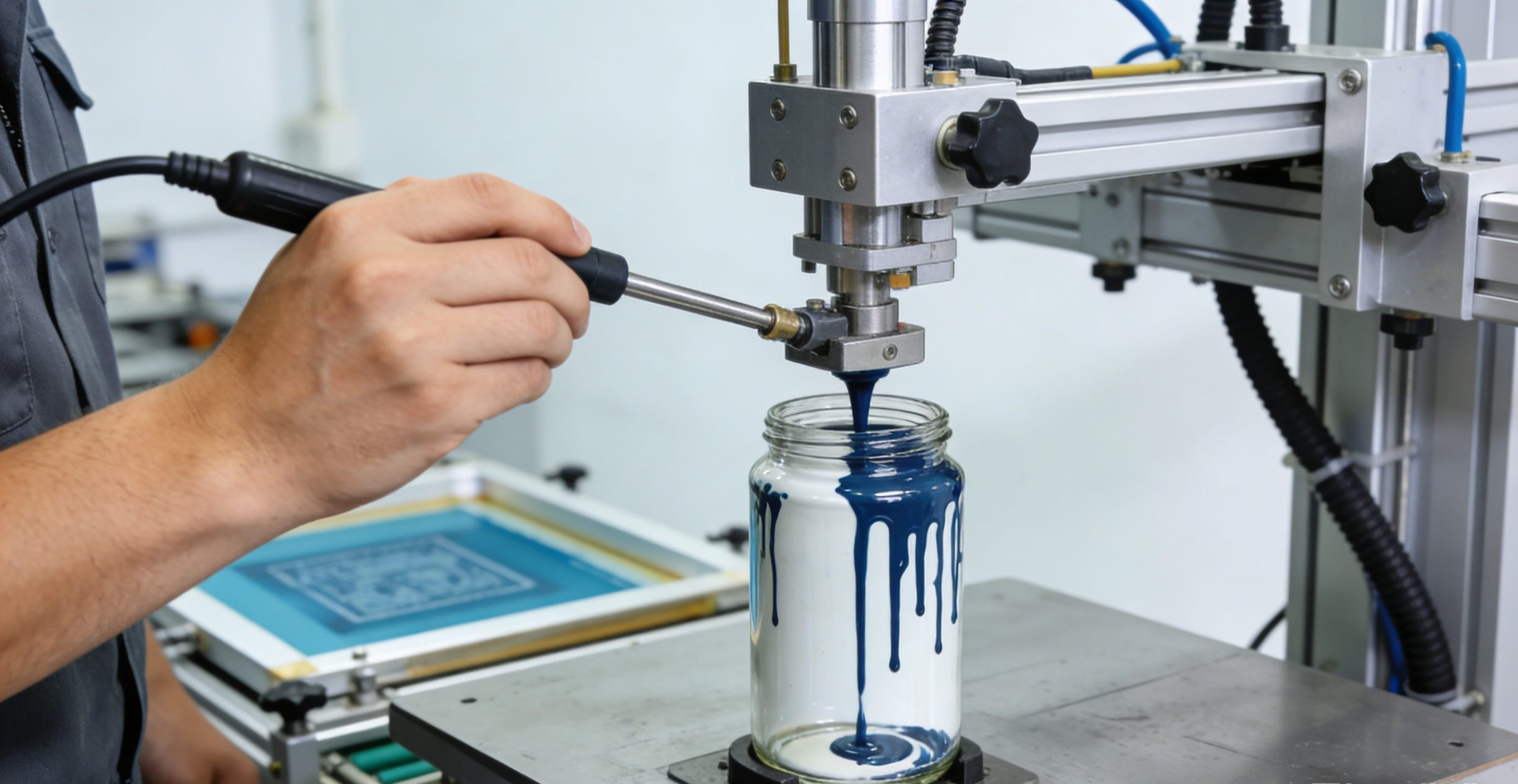
1. Material & Process Upgrade: We abandoned traditional low-temperature printing and adhesive stickers, adopting food-grade ceramic inks that comply with FDA and LFGB standards. The logos were printed on the jar surface and then fired at 620–680℃ in a high-temperature kiln, fusing the ink with the glass surface to form an integrated, scratch-resistant layer.
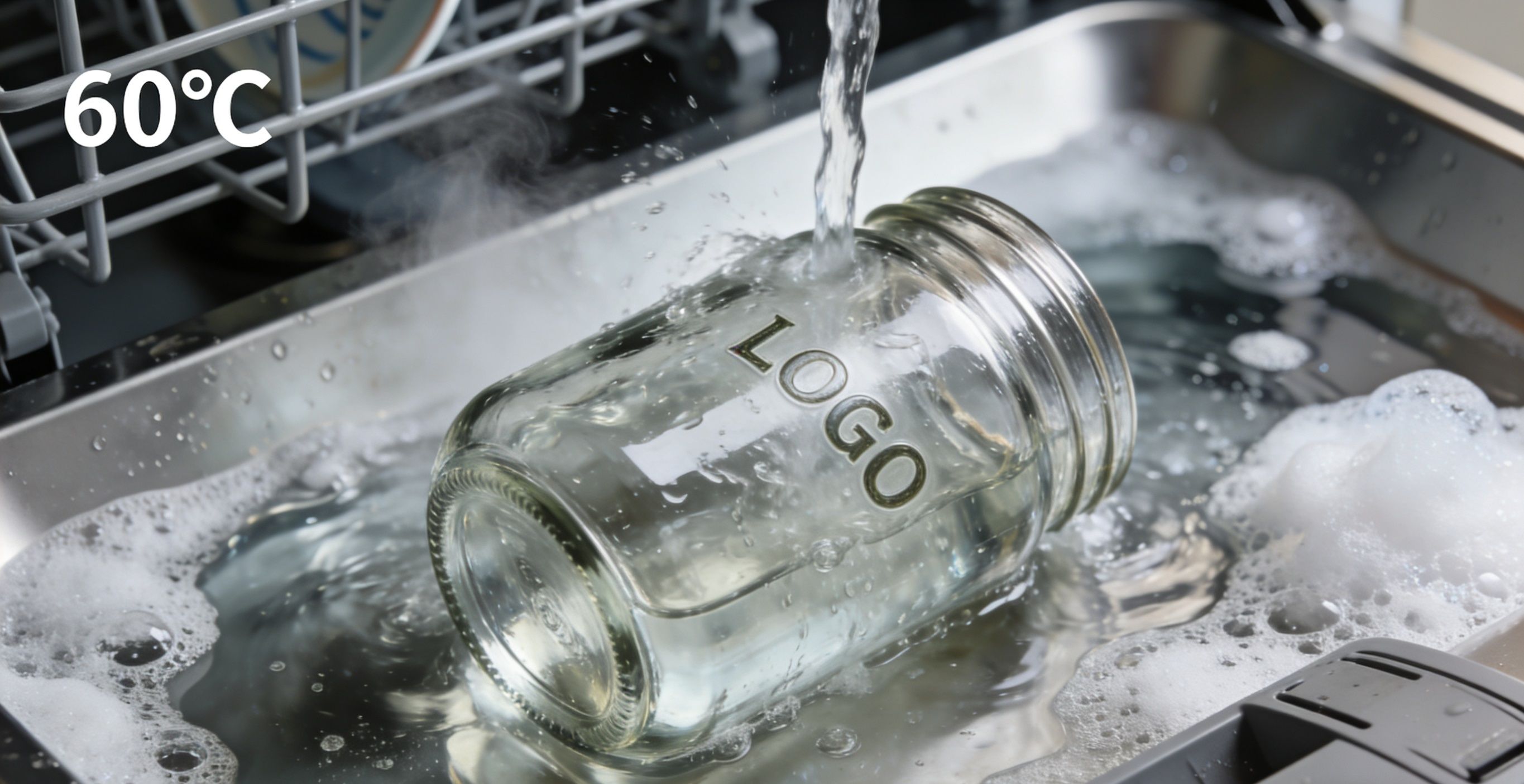
2. Dishwasher Compatibility Testing: Before mass production, we conducted rigorous durability tests—including 50 consecutive dishwasher cycles (60℃ hot water, strong detergent) and scratch tests with steel wool—to verify logo integrity.
3. Custom Design Optimization: We adjusted the logo’s color saturation and line thickness to ensure clear visibility even after repeated cleaning, while maintaining the brand’s visual identity.

Accurately measured the size, thread and sealing surface of the original glass bottle mouth

Optimized the cap structure and internal sealing gasket, adjusted the cap size and radian to perfectly fit the bottle mouth
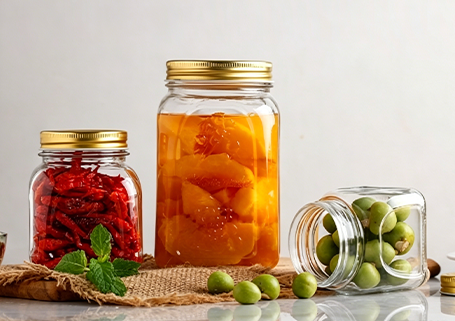
Conducted repeated trial assembly and leakage testing to verify the matching degree between the improved cap and bottle
Final Result & Data Feedback
To address the client’s needs for durable, dishwasher-safe logo printing, our technical team recommended a high-temperature screen printing and ceramic decal (decal firing) dual solution, tailored to their product characteristics:
1. Material & Process Upgrade: We abandoned traditional low-temperature printing and adhesive stickers, adopting food-grade ceramic inks that comply with FDA and LFGB standards. The logos were printed on the jar surface and then fired at 620–680℃ in a high-temperature kiln, fusing the ink with the glass surface to form an integrated, scratch-resistant layer.
2. Dishwasher Compatibility Testing: Before mass production, we conducted rigorous durability tests—including 50 consecutive dishwasher cycles (60℃ hot water, strong detergent) and scratch tests with steel wool—to verify logo integrity.
3. Custom Design Optimization: We adjusted the logo’s color saturation and line thickness to ensure clear visibility even after repeated cleaning, while maintaining the brand’s visual identity.
Client Testimonial
"Bolite’s high-temperature printing solution completely solved our logo durability problem. The logos are as durable as the glass itself, and the dishwasher-safe performance exceeded our expectations. We no longer need to rely on stickers—this solution has not only saved us costs but also strengthened our brand’s sustainable image in the market."